
















































Paid Marketing in Karachi: How to Run Ads Without Wasting Your Budget

Ask a few business owners in Karachi about their experience with online ads and you will hear a similar story. They boosted some posts, ran a Google campaign for a month, spent a fair amount of money and got plenty of clicks. The phone barely rang. So they decided ads don’t work for their business.
Most of the time the ads were fine. What went wrong was everything around them: who was being targeted, where the click landed and whether anyone was tracking what happened afterwards. This post covers how paid marketing works in practice, so you can avoid that story.
What paid marketing actually covers
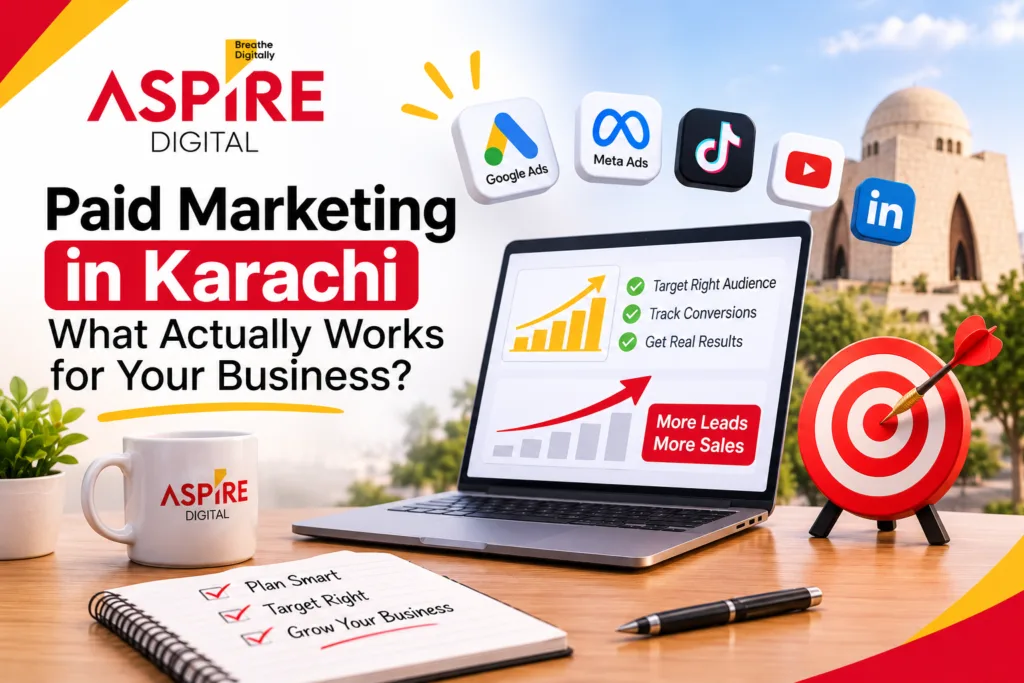
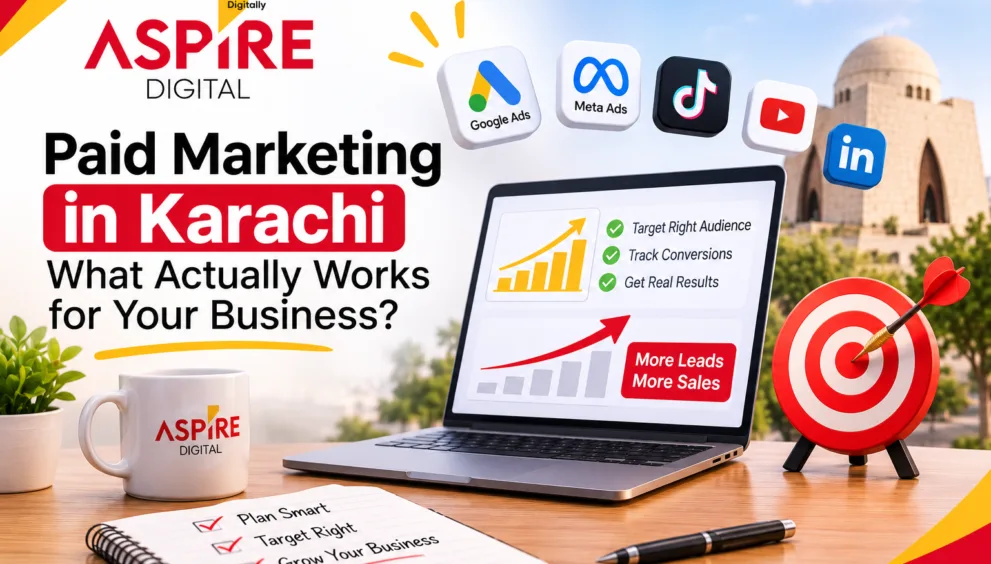
Paid marketing is any advertising where you pay to put your business in front of people. That includes Google Search ads, Facebook and Instagram ads, YouTube and TikTok video campaigns, LinkedIn ads for B2B and remarketing that follows visitors who left your site without buying.
Each platform reaches people at a different moment. Someone searching “AC repair near me” on Google is ready to call. Someone scrolling Instagram has no plan to buy anything yet, but a good ad can still catch their interest. Mixing these up is where a lot of budget gets lost. If you want a broader look at the options, our guide on the best types of paid media for your business goes through them one by one.
Google Ads or Meta Ads: which one first?
This is the question we hear most often, and the honest answer is that it depends on what you sell.
Google Ads works best when people already search for your product or service. A dental clinic, a law firm, a tutoring academy or a logistics company all fit here, because customers go looking when they need them. You show up at that exact moment.
Meta Ads (Facebook and Instagram) work better when people don’t know they want your product yet. A new restaurant, a clothing brand or a property launch can use Meta to create interest and get in front of people based on their location and interests.
Most businesses end up using both. Meta creates the interest, and Google picks it up when that person finally searches. If you are still deciding between ads and organic traffic as well, read our comparison of SEO vs Google Ads for Pakistani businesses.
Where TikTok, YouTube and LinkedIn fit
These three are easier to understand once you give each one a clear job.
- TikTok is good for cheap reach and quick awareness, especially with a younger audience.
- YouTube builds familiarity at a low cost per view, and those viewers can later be shown remarketing ads.
- LinkedIn is expensive per click, but if you sell to companies, it lets you target by job title, industry and company size. For B2B services, recruitment and corporate offers, that precision is worth paying for.
You don’t need all of them from day one. Start where your customers actually spend time and add channels once the first one is working.
How much should you spend?
There is no fixed number, because it changes with your industry and how many competitors are bidding for the same customers. A plumber in Gulshan and a real estate developer in DHA are in very different markets.
That said, many local businesses in Pakistan start with around PKR 50,000 to 100,000 a month in ad spend and scale up once the campaigns are profitable. Below that, it gets hard to collect enough data to know what is working.
One thing to be clear about before you sign with anyone: your ad budget and the agency fee are two separate things. The ad budget should go straight to Google or Meta from your own ad account. The management fee is what you pay the agency. If an agency bundles them together and won’t show you where the money goes, ask questions.
Why clicks alone don’t pay the bills
This is the part most people skip. A click costs money whether or not the person becomes a customer. What happens after the click decides whether the campaign makes sense.
The landing page matters. If someone clicks an ad for “AC installation” and lands on your homepage with ten different services, they will leave. A focused page with one offer, a clear phone number or WhatsApp button and a short form converts far better. It also has to load quickly on mobile, because that is where most of your traffic will come from. A well-built website makes a bigger difference to ad results than most people expect.
Tracking matters even more. Without conversion tracking, you only see clicks and impressions. With Google Analytics 4, Meta Pixel and call and WhatsApp tracking set up properly, you can see which ad brought which enquiry and what each lead cost you. Then you can move money away from what isn’t working and into what is. We wrote more on this in our complete guide to lead generation in digital marketing.
Remarketing: getting the second chance
Most people who visit your website won’t buy or enquire on the first visit. They compare, get distracted, or just aren’t ready. Remarketing lets you show ads to those visitors afterwards on Google, YouTube, Facebook and Instagram.
It is usually one of the cheaper parts of a campaign because you are talking to people who already know you. For many businesses, a good share of final conversions comes from this group.
How long until you see results?
Ads can bring traffic and enquiries within days of going live. That is the big advantage over SEO. But the first four to six weeks are mostly about testing: different audiences, different ad copy, different images and videos. Costs tend to be higher in this stage and then settle once the campaign learns what works.
If someone promises you stable, low-cost leads in the first week, be careful. Good results take a little patience and regular adjustments.
If you want ads for quick leads and a long-term traffic source at the same time, many businesses run PPC alongside SEO services or local SEO, so the paid traffic brings leads now while organic rankings build in the background.
Common mistakes we see
- Running ads without conversion tracking, so nobody knows what is working
- Sending every click to the homepage
- Targeting all of Pakistan when the business only serves one city
- Skipping negative keywords on Google, which lets budget leak into irrelevant searches
- Changing the campaign every two days before it has enough data
- Letting the agency own the ad account, so you lose your data if you leave
That last one is worth repeating. Your ad accounts, audiences and data should stay in your name, always.
Ads work differently by industry
A clinic, a school and a restaurant do not need the same campaign. Patients search on Google and care about trust. Parents look for schools mostly during admission season. A restaurant depends on visuals, offers and location. If you want to see how this plays out, we have separate pages on marketing for healthcare, education, restaurants and real estate.
You can also read how we handled search growth for a medical client in our IRCC Pakistan case study.
Picking someone to run your ads
When you talk to an agency, a few simple questions tell you a lot:
- Will the ad accounts be in my name?
- How will you track leads, not just clicks?
- Is your fee separate from my ad budget?
- What will you report on every month?
Good answers are specific. You should hear about enquiries, calls, cost per lead and return on ad spend, not just impressions and likes.
At Aspire Digital we are a Google Premier Partner and a Meta Partner, and we run Google, Meta, YouTube and TikTok campaigns for businesses across Pakistan. You can see how we work on our paid marketing page or read about our Google Ads management in Pakistan.
If you are already running ads and not sure whether the money is being used well, get in touch with us for a free ads review. We will look at your setup and tell you honestly where the budget is going.