






























































Peripheral Artery Disease: Warning Signs, Causes and Treatment Without Open Surgery

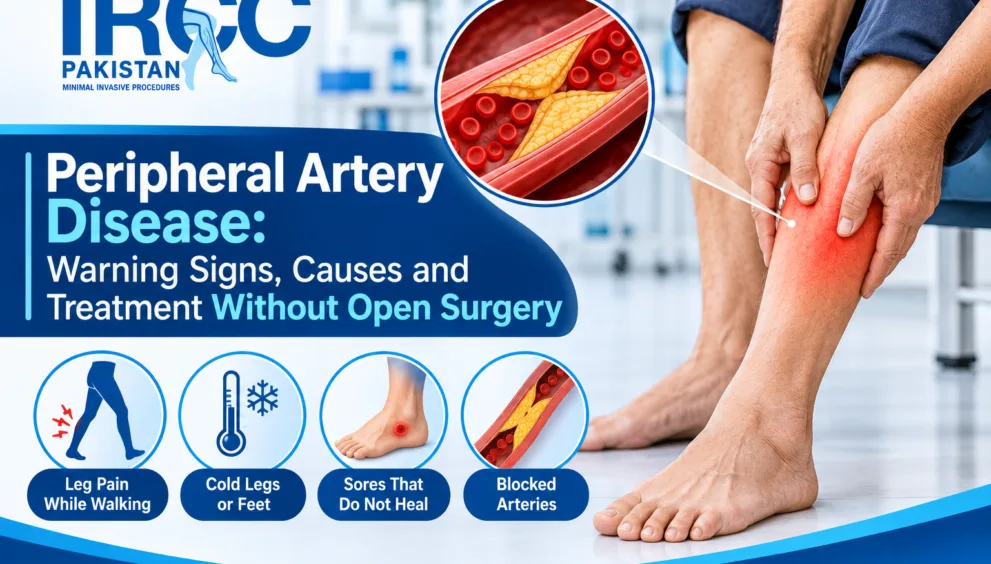
Peripheral Artery Disease: Warning Signs, Causes and Treatment Without Open Surgery
A lot of people put up with leg pain for years. They assume it is age, or a pulled muscle, or just part of getting older. Sometimes it is. But if your legs hurt when you walk and the pain goes away when you rest, it is worth getting your arteries checked. That pattern is one of the classic signs of peripheral artery disease, usually called PAD.
What PAD actually is
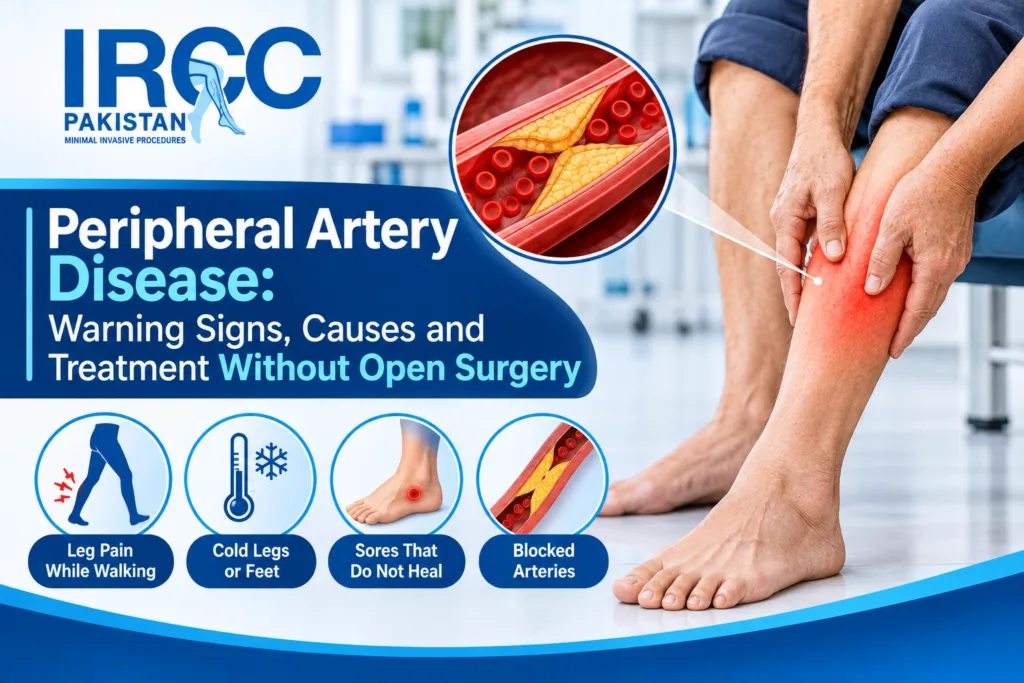
PAD happens when the arteries that carry blood to your legs and feet become narrowed or blocked. Over time, fatty plaque builds up inside the artery walls. Less blood gets through, which means the muscles and tissues in your legs get less oxygen and fewer nutrients. This is why walking becomes painful.
You will often hear the term peripheral vascular disease (PVD) used alongside PAD. PVD is the wider term and covers diseases of both arteries and veins in the limbs. PAD is the most common type and the one most people are dealing with when they get this diagnosis.
PAD is a chronic condition, and it is not one to ignore. Left alone, it can get worse and lead to serious complications.
What causes it
The most common cause is atherosclerosis, which is the plaque buildup mentioned above. Blood clots can also form on the artery walls and shrink the space further, and in some cases they block a major artery completely.
Less common causes include injury to an arm or leg, unusual anatomy of the muscles or ligaments, and infection.
There is also a strong link with the heart. People with coronary artery disease often have PAD too, because both come from the same plaque problem. This is one reason doctors take PAD seriously even when the only complaint is sore legs. Patients with PAD have a higher risk of heart attack and stroke.
Who is more likely to get it
Some risk factors you cannot change. Being over 50, having a history of heart disease, being male, being a woman after menopause, and having a family history of high cholesterol, high blood pressure or PAD all raise your chances.
Others you can do something about:
- Smoking or using tobacco
- Diabetes
- High cholesterol
- High blood pressure
- Being overweight
- Not getting enough physical activity
- Coronary artery disease
If you smoke or have diabetes, your risk of complications is the highest, because both damage blood flow on their own.
Symptoms worth paying attention to
PAD does not always announce itself loudly. These are the signs to look for:
- Pain or cramping in the legs while walking, which eases with rest (this is called claudication)
- Numbness or weakness in the legs
- A cold feeling in the lower leg or foot
- Sores on the feet or toes that do not heal
- A weak pulse, or none at all, in the legs
Sores that refuse to heal deserve special attention. If you have diabetes and notice one, do not wait.
What happens if PAD is ignored
Untreated PAD can progress to critical limb ischemia (CLI). This is a severe stage where the blood supply to the leg is so poor that tissue starts to die, and it is often linked to lower limb amputation.
The encouraging part is that amputations have dropped significantly as more patients get access to procedures that restore blood flow. Saving a limb is not only about the leg itself. It keeps a person independent and mobile, and protects their quality of life.
How PAD is treated
Treatment has two goals: control the symptoms, and stop the disease from getting worse so the risk of heart attack and stroke goes down.
For many patients, the first steps are lifestyle changes and medicines. That means regular exercise, better nutrition, quitting smoking, and keeping diabetes, blood pressure and cholesterol under control. Medicines such as antiplatelet agents and drugs that relax the blood vessel walls can also help blood flow.
When that is not enough, or the blockage is serious, interventional radiology offers three main options:
- Angioplasty: a tiny balloon is guided to the narrowed section and inflated to open the artery.
- Stent placement: a small mesh tube is placed to keep the artery open.
- Atherectomy: a device removes plaque from inside the artery.
All of these are done under X-ray guidance, usually with local anesthesia. There is no large incision, just a small nick in the skin that does not need stitches. Most patients go home the same day, and light daily activity usually resumes within a few days. Compared with open bypass surgery, recovery is a lot quicker.
A procedure can take anywhere from 60 to 120 minutes depending on how complicated the blockage is. Some mild discomfort at the insertion site afterwards is possible, but the procedure itself should not be painful.
One honest point: these procedures restore blood flow, but they do not cure PAD. It is a long-term condition, so the lifestyle side matters just as much as the procedure. Quitting smoking and managing diabetes and blood pressure is what keeps the problem from coming back.
Other conditions that can overlap
Vascular problems rarely show up in isolation. Some patients also need evaluation for vascular malformation treatment if there is a structural abnormality in their vessels. Those with visible, bulging veins in the legs may be dealing with a different problem altogether and could look at varicose vein ablation. People with kidney disease who depend on dialysis may need help with their access, which is covered under dialysis access care and management. And if the leg or knee pain turns out to be something else, options like genicular arterial embolization for knee pain, plantar fasciitis treatment and tenosynovitis treatment are worth knowing about.
Living abroad and need treatment?
Many overseas Pakistanis prefer to get treated at home. You can send your reports for a case review before you travel. Details are available for patients from the UAE, Saudi Arabia and Qatar, and the international patients page has everything in one place.
When to see a specialist
If your legs hurt when you walk, if a sore on your foot is not healing, or if your leg feels cold and numb, get it looked at instead of waiting. At IRCC Pakistan, all peripheral vascular procedures are performed by specialist interventional radiologists using real-time imaging. You can read more on our peripheral vascular disease treatment page, find a location on the clinics page, or contact our team to book a consultation.
Catching PAD early gives you more options, and often simpler ones.