

































































Understanding the Different Types of Skin Cancer and Their Warning Signs

Skin cancer is a major health concern, particularly in Australia, where exposure to ultraviolet (UV) radiation is a significant risk factor. Understanding the different types of skin cancer can help people recognise unusual skin changes and seek medical advice at the right time.
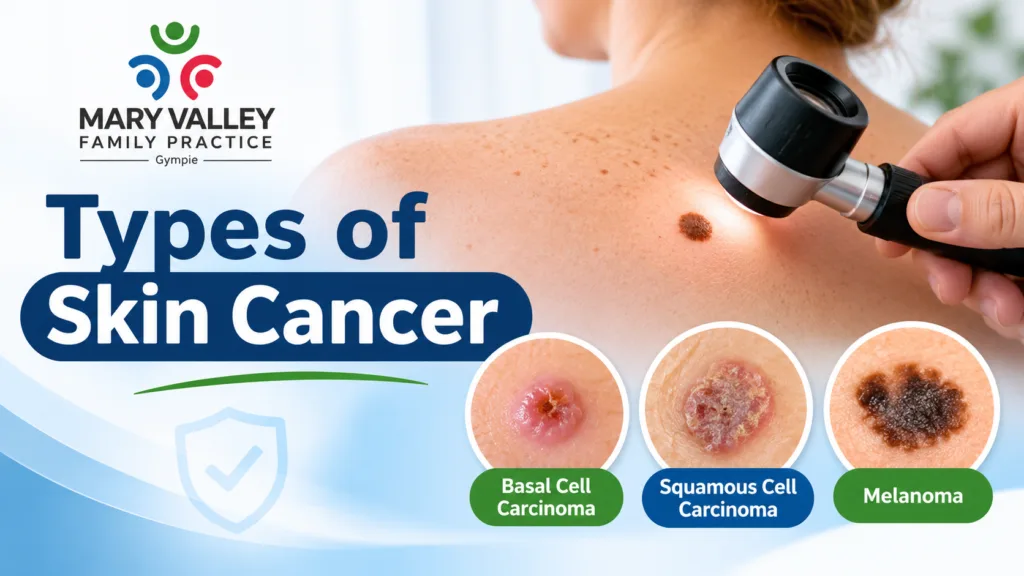
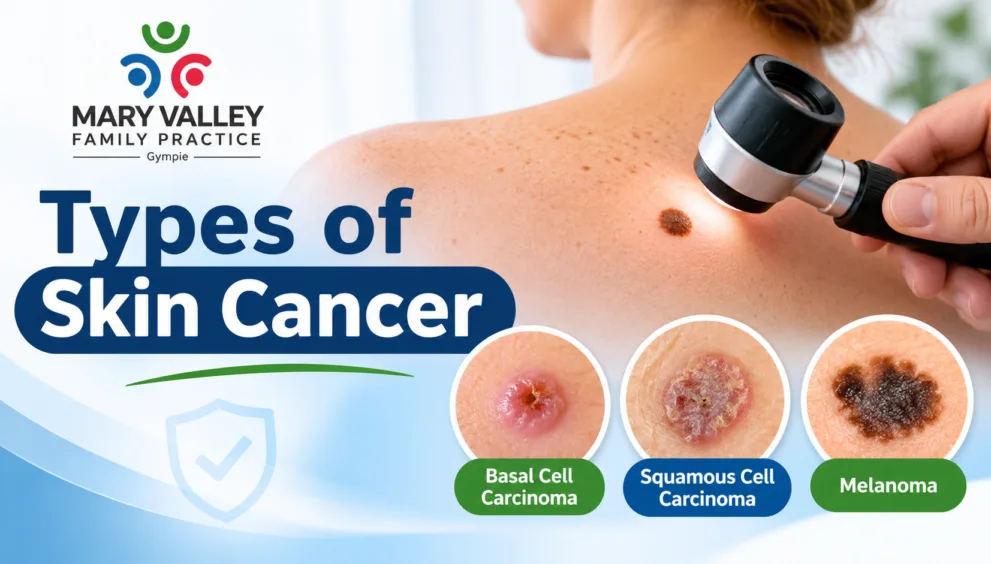
There are three main types of skin cancer: Basal Cell Carcinoma, Squamous Cell Carcinoma and Melanoma. Although they affect the skin differently, early identification and appropriate medical care are important for all three.
1. Basal Cell Carcinoma (BCC)
Basal Cell Carcinoma is the most common type of skin cancer. It generally develops on areas frequently exposed to sunlight, including the face, neck, ears and arms.
Some common warning signs include:
- A pearly or shiny bump on the skin.
- A pink or red patch.
- A sore that repeatedly bleeds or develops a crust.
- A skin lesion that does not heal properly.
Although BCC usually grows slowly and rarely spreads to other parts of the body, it can damage surrounding tissue if left untreated.
2. Squamous Cell Carcinoma (SCC)
Squamous Cell Carcinoma is another common form of skin cancer. It often develops on sun-exposed areas but can also occur on other parts of the body.
Possible symptoms include:
- A firm red lump.
- A rough or scaly patch.
- A sore that does not heal.
- A lesion that becomes painful or bleeds.
SCC can spread to other parts of the body in some cases, making early medical assessment important.
3. Melanoma
Melanoma is the most serious of the three main types of skin cancer because it has a greater potential to spread to other parts of the body.
It can develop from existing moles or appear as a completely new spot.
Some warning signs include:
- Changes in mole size or shape.
- Uneven or irregular borders.
- Different colours within the same mole.
- A spot that continues changing over time.
- A new unusual mole or skin lesion.
Melanoma can also develop in areas that receive little sunlight, such as the soles of the feet, under fingernails and on the scalp.
What Causes Skin Cancer?
Exposure to ultraviolet radiation from sunlight is the leading cause of most skin cancers.
Several factors may increase the risk, including:
- Frequent exposure to direct sunlight.
- A history of sunburn.
- Fair skin that burns easily.
- Having numerous moles.
- A family history of skin cancer.
- A weakened immune system.
Understanding these risk factors can help individuals take better care of their skin.
How Can You Protect Yourself from Skin Cancer?
Prevention and early detection are important parts of maintaining healthy skin.
Here are some practical ways to reduce UV exposure:
- Apply broad-spectrum SPF 50 or SPF 50+ sunscreen.
- Wear protective clothing and a wide-brimmed hat.
- Stay in the shade when UV levels are high.
- Wear sunglasses that provide UV protection.
- Avoid artificial tanning beds.
- Monitor your skin for new or changing spots.
Remember that sunscreen should be used alongside other sun protection measures.
Why Are Regular Skin Checks Important?
Regular skin awareness can help people identify suspicious changes before they become more serious.
A GP can examine unusual spots, assess suspicious moles and determine whether further investigation is needed.
If a lesion looks concerning, a doctor may recommend a biopsy to confirm whether it is cancerous and identify the specific type.
You should not wait for your next routine appointment if you notice a new or changing spot. Arrange a medical assessment promptly.
Learn More About Different Types of Skin Cancer
Knowing the differences between Basal Cell Carcinoma, Squamous Cell Carcinoma and Melanoma can help you understand the importance of skin health and early detection.
For a more detailed explanation of skin cancer types, symptoms, causes and treatment assessment, visit this informative guide from Mary Valley Family Practice:
Types of Skin Cancer: Basal Cell, Squamous Cell and Melanoma
Mary Valley Family Practice provides general practice services and skin check information for patients in Gympie and surrounding communities.
Final Thoughts
Skin cancer can affect anyone, regardless of age or lifestyle. Understanding its different forms and recognising unusual skin changes are important steps towards protecting your health.
If you notice a suspicious mole, persistent skin lesion or any unusual changes, consult your GP for professional advice.